

What a station owner should check before saying yes to EV charging
If you own a gas station or a convenience store, someone has probably already asked you about EV charging. Maybe a network rep, maybe a developer, maybe a customer at the register. The pitch is usually about the future of fuel. The decision is about your lot, your power, your store and your schedule. These are the questions worth answering before anyone signs anything.
1. How much power can the site actually get?
Everything starts at the electrical service. A fast charging site draws far more power than a store, its coolers and its pumps put together, and most stations were never built for that load. The first question is not how many stalls you want. It is what your utility can deliver to your lot, and how long it will take.
That answer comes from the utility, not the contractor. Some sites can be served from the existing transformer with modest work. Others need a new service, a new transformer or work on the utility's side of the meter, and those can take many months depending on the utility's queue and equipment lead times. Anyone who quotes you a schedule before talking to the utility is guessing. Ask who has checked your service and what they found.
2. Where do the stalls go, and what do they take away?
Fuel positions, delivery routes, the air and water station, parking for the store and the path tanker trucks use all compete for the same asphalt. A good layout puts chargers where a driver can see the store from the stall and walk to the door without moving the car, and where a fuel delivery never has to wait behind a charging car.
Ask to see the stalls drawn on your actual lot, not a generic plan. Count what the layout removes as well as what it adds: parking spaces the store relies on at lunch, a corner a delivery truck needs to turn, room you were saving for something else. A plan that ignores how your lot works on a busy Friday is not a plan.
3. What does the stop do for the store?
A fast charge commonly takes twenty to thirty minutes for most of a battery. A fuel stop takes five. That difference is the opportunity: a driver who has time to walk in, use the restroom, buy food and coffee, and walk back out before the car is ready. For many station owners the store is where the margin lives, which makes a long-dwell customer worth more than the kilowatt-hours they buy.
Be careful how that shows up in a proposal. Store sales from charging drivers depend on your store, your hours, your layout and your market. They are real, but they belong in the plan as upside, not as a guaranteed number that makes the rest of the math work. If a pitch only works when the store sales are counted, it does not work.
4. Is there traffic that needs to charge here?
Electric drivers choose stops differently from fuel customers. On a road trip they plan around where they can charge, often before they leave home, and they favour sites on their route with food, restrooms and lighting. In town, many drivers without a charger at home top up near where they live and shop. Either pattern can work. A lot that sees neither will struggle.
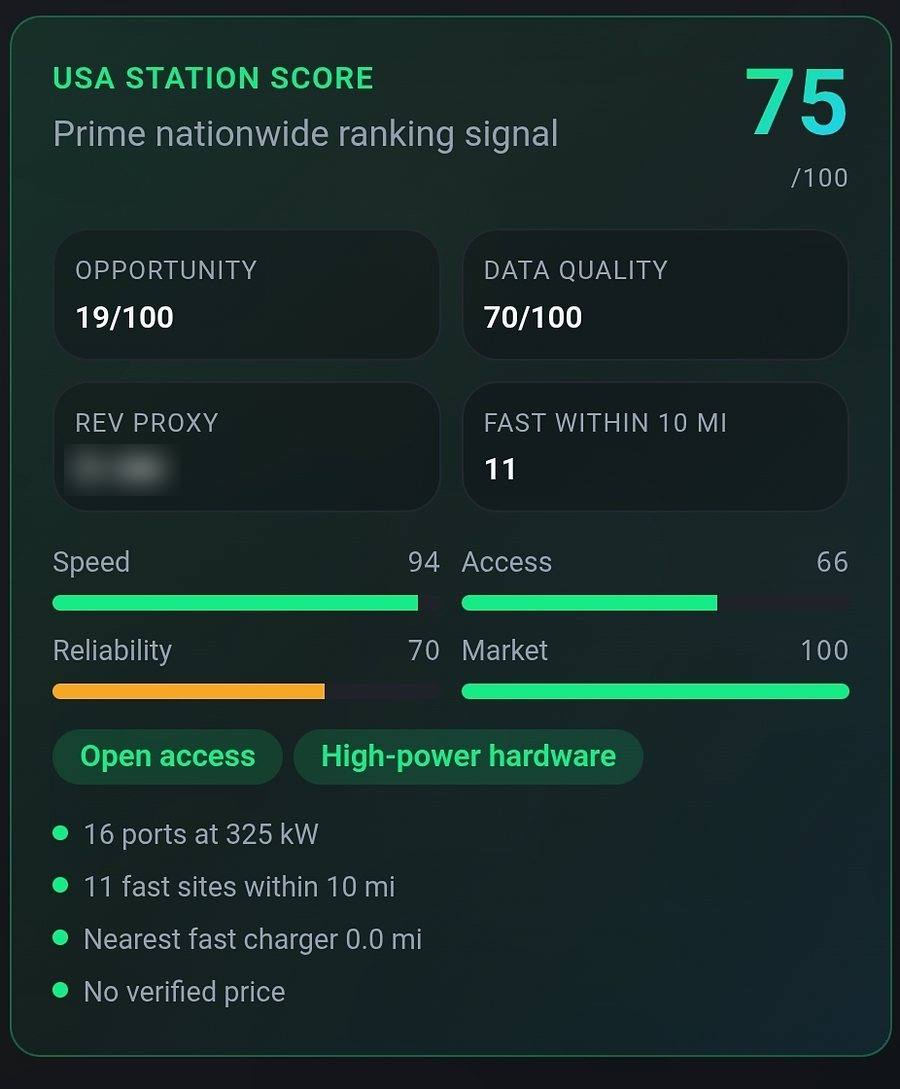
Ask what the traffic past your site looks like and how far the nearest fast charging is in each direction. A gap in coverage along a busy route is a stronger signal than a busy road with three fast charging sites already on it. The siting question is as much about who is missing as about who drives by today.
5. Who owns the equipment, and who gets the revenue?
There are two broad ways chargers end up on a station. In one, a network leases space on your lot, owns the equipment and runs it. In the other, the property owns the chargers as an asset, with the charging revenue on its own books. Each has trade-offs in cost, control and risk, and the terms vary a great deal from one offer to the next.
Whatever the structure, read who owns what at the end of the term, who sets and changes the price drivers pay, who pays for repairs, what happens if the site is sold, and whether anything stops you from adding stalls or a different brand later. Those answers matter more over ten years than any number in the first year.
6. Who keeps the chargers working?
A broken charger is worse than no charger. Drivers check the apps before they arrive, and a site with a record of failed sessions loses them, along with their store visits. Ask who monitors the equipment, how fast a failed unit is repaired, who holds the warranty and what it covers, and who a driver calls when something goes wrong at midnight. We wrote more about this in Uptime Is the Brand.
7. What does the schedule really look like?
Construction is rarely the long pole. Utility work, permits and equipment delivery usually are. A realistic schedule runs those in parallel and starts the utility conversation on day one. If a proposal shows a short, tidy timeline with no mention of the utility, ask where the utility's part is. Our note on interconnection explains why it sets the pace.
A short list to keep
Before saying yes, a station owner should be able to answer: what power the site can get and when; where the stalls go and what they displace; what the store gains, treated as upside; whether the traffic past the lot needs to charge; who owns the equipment and the revenue; who keeps it running; and what the utility says about the schedule. If any of those is still a guess, the decision is early. None of it is guaranteed, and every figure you are shown should be an estimate with its assumptions written down.
Check your station
Enter your station's address for a first read on the site: traffic, nearby fast charging and what the lot may support. No site visit for the first pass.
Check Your Station