

What hosting a Supercharger-class site actually asks of a parcel
"Host a Supercharger-class site" sounds like a single yes-or-no decision, and the pitch is usually framed that way, a network wants your parcel, you say yes, stalls appear. What actually gets negotiated underneath that yes is a longer list of specific commitments, about power, about exclusivity, about who controls the pad over the life of the agreement, and most of it is set by the network's own operating standard rather than by anything the property owner proposes. None of it is hidden exactly, but almost none of it is volunteered before the term sheet is in front of you.
The power commitment comes first
Supercharger-class speed is a function of simultaneous draw across every stall on the pad, not just the rating of a single cabinet, so the first thing any network's engineering team checks is whether the parcel's electrical service can support that draw today or can be upgraded to support it on the schedule the deal assumes. That single question usually decides more of the negotiation than the real-estate terms do. A parcel with marginal service capacity either absorbs a longer interconnection timeline before it opens, or absorbs a smaller stall count than the network would otherwise want, and either outcome shows up in the economics the owner is being offered, whether or not it is explained that way.
Exclusivity is the clause worth reading twice
A network's ground lease is rarely silent on what else can happen on the rest of the parcel. Co-location with another charging brand on the same pad, a second operator's cabinets facing the same frontage, even certain adjacent uses can be restricted for the life of the agreement, because the network is protecting its own branding and queue-management standard, not because the owner's other plans for the property were part of the conversation. For an owner who already has, or might later want, a relationship with more than one network or operator, this is the clause that determines how much of the site's future stays theirs to decide and how much was signed away on day one.
Uptime and signage are the network's standard, not the owner's
A Supercharger-class pad carries a visible brand promise about reliability, and the network enforces that promise through its own maintenance contract, its own spare parts stocking and its own signage program, usually with the owner having little operational input into any of the three. That can be a genuine advantage for an owner who wants nothing to do with running charging infrastructure, the network's maintenance standard is typically stricter than most property management teams would build on their own. It is also the clearest illustration of what a hosted deal trades away: the owner is leasing a pad to an operating standard it does not set and cannot easily change mid-term, in exchange for a fixed return that does not move no matter how well the finished site performs.
Term, renewal and what happens at the end
Ground leases for charging infrastructure typically run long, often fifteen to twenty years with renewal options the network, not the owner, controls the timing of. That length matters more on a charging pad than it would on most other outparcel deals, because the asset at the end of the term is not a vacant pad, it is an interconnected, permitted, energized site with a specific electrical build that may or may not suit whatever the owner or a future buyer wants to do with the parcel next. An owner evaluating the term sheet should be evaluating the exit as carefully as the rent, because the rent is the part that is easy to compare and the exit is the part that is easy to overlook.
Reading the ask before answering it
None of this argues against hosting. A network's standard, its maintenance discipline and its brand recognition are real value for an owner who wants a fixed, low-involvement return and nothing more. It argues for reading the ask in full before answering it, the power commitment, the exclusivity clause, the maintenance and signage standard, and the term and exit, rather than evaluating the headline rent in isolation. An owner who understands exactly what is being asked is in a much better position to negotiate it, or to decide that a host-owned site built to the same electrical standard is the better way to capture what the parcel is actually worth.
Screen the parcel before the term sheet arrives
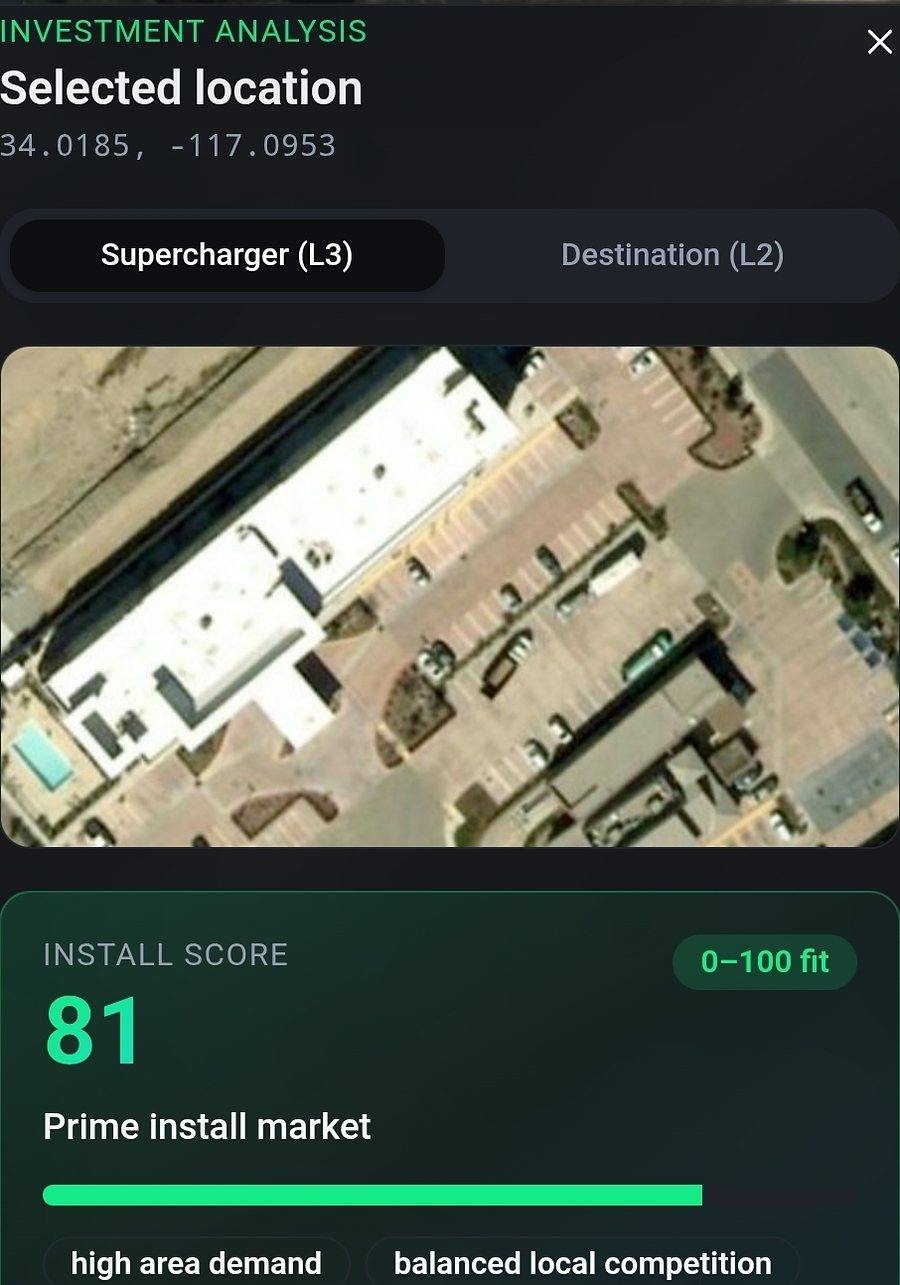
Enter an address and our site-intelligence layer returns the same power, access and market signals a network's own team would check, a starting point for reading any ground-lease offer against what the site can actually support.
Run a Site Scan