

What a 500 kW site actually requires
The current generation of DC fast charging dispenses up to 500 kW to a single vehicle. Multiply that across a bank of stalls and a charging site stops being a parking-lot amenity and becomes a serious industrial electrical load, on par with a mid-size manufacturing tenant. The parcels that win are the ones read correctly before anyone draws a rendering.
Start at the service, not the stall
The first question on any candidate site is not traffic; it is capacity. What service exists today, what the local circuit can accept, and what the utility will offer, at what cost and on what timeline. A four-stall fast bank with managed load can often live on a substantial existing commercial service. A flagship site with eight or more high-power stalls is a new dedicated service and, almost always, a new transformer.
This is why the transformer's position on the plan matters as much as its rating. Every additional foot between the utility point of interconnection and the power cabinets is trench, conduit, copper and voltage drop. Well-designed sites place the electrical spine tight and short, and leave a stubbed path to the stalls that do not exist yet.
The load is managed, not raw
Nameplate arithmetic overstates what a site draws. Charging sessions ramp, taper and interleave; a properly configured site runs orchestrated by a load-management layer that holds aggregate draw inside the service rating and, where economics demand it, inside a demand-charge target. On-site storage extends the same logic: buffer the peaks, arbitrage the tariff, and protect the margin on every dispensed kilowatt-hour.
This is also where open protocols earn their keep. OCPP-networked equipment keeps the operator layer competitive, pricing, uptime monitoring, load orchestration and payment stay portable rather than locked to one vendor's stack.
Traffic converts, geometry decides
Utilization models begin with traffic, corridor volumes, dwell profile, the EV share of the local fleet and its growth curve. But geometry is what converts a passing vehicle into a session. Drivers choose sites they can enter, charge at and exit without ceremony: deep stalls, pull-through positions for vehicles with trailers, canopy lighting, sight lines from the arterial. A technically perfect site with hostile geometry underperforms its model every month of its life.
The paper is part of the engineering
Permits, utility applications, easements where the transformer wants to sit on a lot line, ADA compliance in the stall layout, stormwater where the canopy footprint triggers it, the administrative path is not separate from the technical one. The sites that energize on schedule are the ones where the single-line diagram, the incentive applications and the utility queue position were advanced together, by one team, from the first week.
Read your parcel before you commit capital
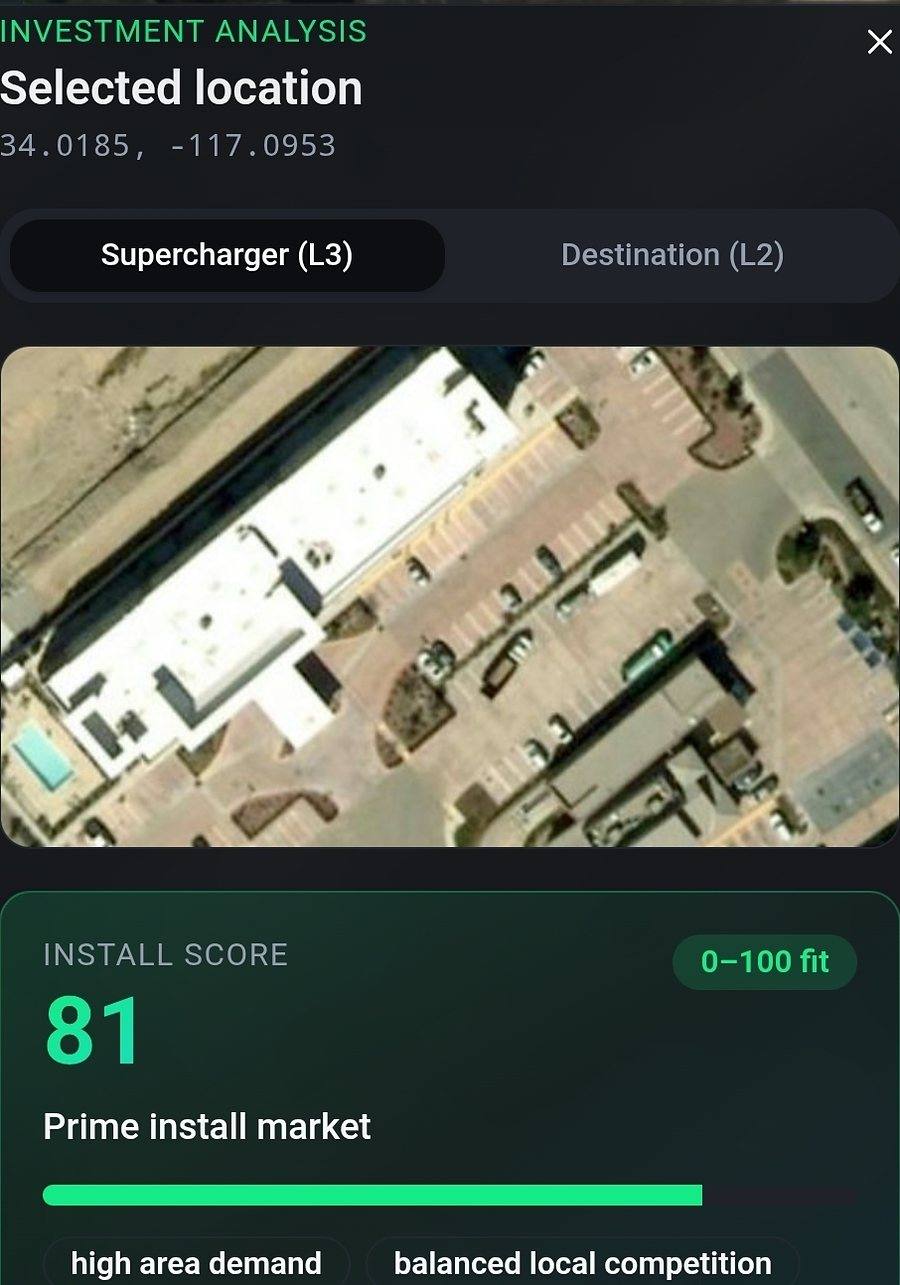
The site scan returns the preliminary screen in seconds; our engineering team returns the full read, service, layout, timeline and the incentive stack, as a fixed-scope quote.
Request a Charging Quote